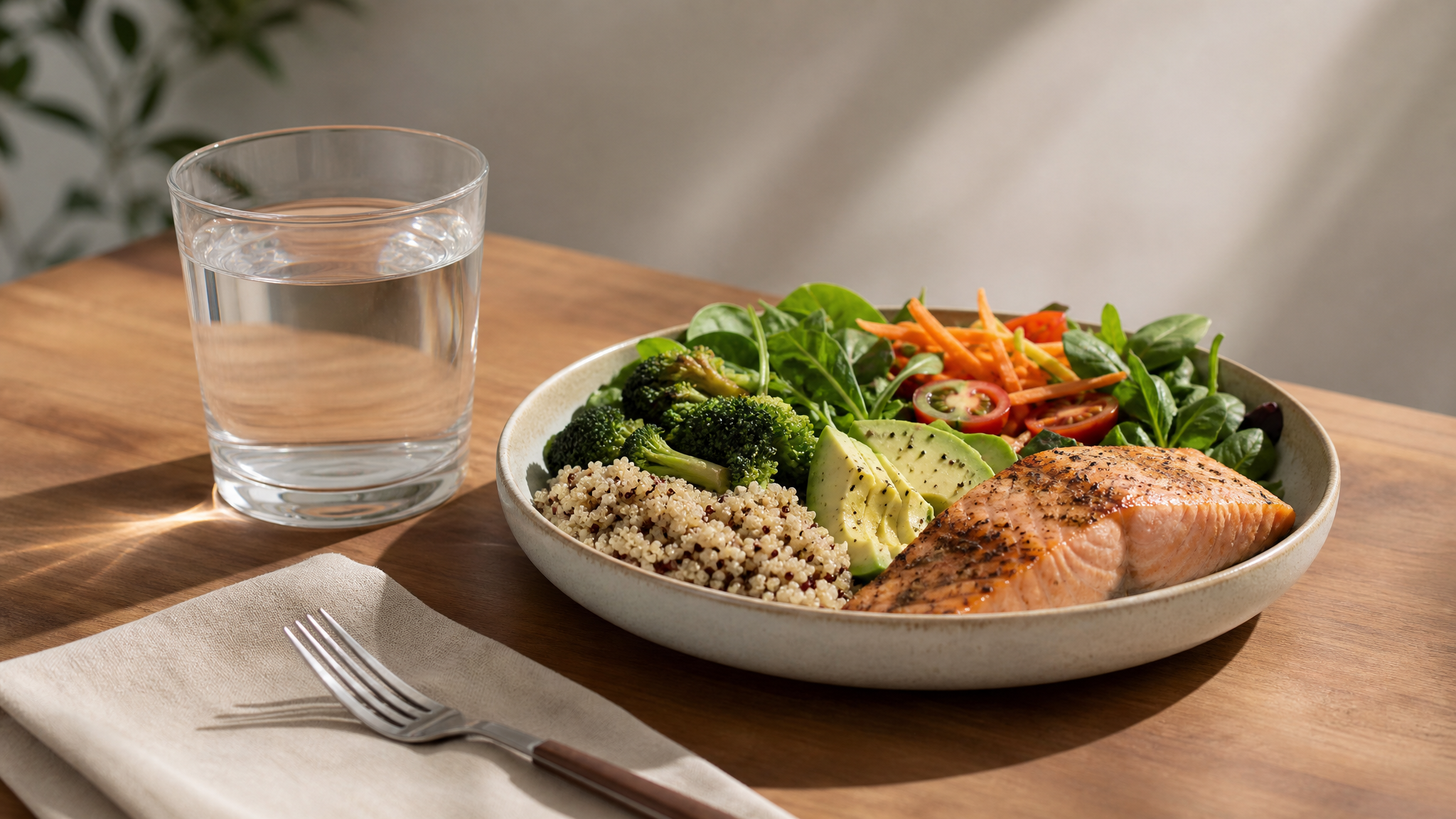
Drinking water is one of the healthiest habits you can have. But when you drink it matters more than most people realize.
A lot of people sip water throughout meals without thinking. It feels natural. It helps with swallowing. It seems like the right thing to do.
But drinking large amounts of water during meals may interfere with digestion more than you expect. It is not dangerous, but it is not optimal either.
Here is what happens when you drink water during meals, what the science actually says, and the simple timing adjustment that can improve digestion and reduce bloating.
What Happens When You Drink Water During Meals
Your stomach produces hydrochloric acid to break down food. This acid is strong, and it needs to stay concentrated to do its job well.
When you drink a lot of water during a meal, you dilute that acid. A less concentrated stomach environment may slow down the breakdown of proteins and other nutrients. It can also make you feel fuller faster, which sounds good but may mean you stop eating before you have had enough nutrients.
Some people also swallow more air when they drink while eating, which can contribute to bloating and gas.
This does not mean a few sips of water will ruin your digestion. Small amounts are fine. But gulping a full glass or two during every meal is a habit worth reconsidering.
What the Research Says
The research on this topic is mixed, and that is important to be honest about.
Some traditional medicine systems, like Ayurveda, have long recommended avoiding water during meals to preserve digestive fire. Modern science has not fully confirmed or denied this, but there is some evidence that large volumes of liquid during meals can affect stomach acid concentration temporarily.
A 2008 study in the journal *Clinical Nutrition* found that drinking 300ml of water with a meal did not significantly affect stomach acid levels in healthy people. However, larger volumes or very cold water might have more impact.
The bottom line: a few sips are probably fine. Chugging a full glass with every bite is not ideal. And if you already have weak digestion, acid reflux, or bloating, timing your water differently might help.
The Better Timing Strategy
Here is a simple framework that works for most people:
30 minutes before a meal: Drink a glass of water. This prepares your stomach, helps with saliva production, and can prevent overeating because you are not confusing thirst with hunger.
During the meal: Take small sips if needed. Do not force yourself to avoid water entirely if you are uncomfortable. But avoid drinking large amounts.
30 to 60 minutes after a meal: Drink water freely. Your stomach has done the initial breakdown, and hydration now supports nutrient absorption and normal bowel function.
This timing keeps you hydrated without interfering with digestion.
What About Soup and Water-Rich Foods?
Soup is different from drinking a glass of water. Broths and soups contain nutrients, electrolytes, and often some fat, which slows digestion and does not dilute stomach acid in the same way plain water does.
Water-rich foods like watermelon, cucumber, and oranges also do not have the same effect as chugging water because they come with fiber and nutrients that regulate absorption.
So soup with dinner is fine. A glass of water right before a steak is less ideal.
Cold Water vs. Room Temperature Water
Some people claim cold water “shocks” the digestive system. There is not strong scientific evidence for this in healthy people, but very cold liquids may slightly slow stomach emptying.
Room temperature or warm water is generally easier on digestion, especially if you have a sensitive stomach. Warm water may also help relax the muscles of the digestive tract.
If you love ice water, you do not need to give it up. But if you have bloating or slow digestion, try room temperature water and see if you notice a difference.
Who Should Be Extra Careful
People with the following conditions may benefit most from timing their water intake:
– Acid reflux or GERD
– Bloating and gas
– Slow digestion or constipation
– Weak stomach acid (hypochlorhydria)
– Irritable bowel syndrome
If you have any of these, experiment with drinking less water during meals and more between meals. It is a low-risk change that might make a noticeable difference.
How to Stay Hydrated Without Drinking During Meals
Some people worry that avoiding water during meals will leave them dehydrated. It will not, if you plan it right.
Drink a full glass when you wake up. Drink between meals. Drink 30 minutes before eating. Drink 30 to 60 minutes after eating. Keep a water bottle nearby during the day.
Most adults need about 2 to 3 liters of water daily, depending on activity level, climate, and body size. Spread that out across the day, and you will be fine without chugging at the dinner table.
Common Mistakes
Drinking water because you are bored while eating.
Pay attention to whether you actually need it or if it is just a habit.
Using water to wash down food quickly.
Chewing thoroughly reduces the need for water to help swallowing. Aim for 20 to 30 chews per bite.
Drinking ice-cold water with every meal.
Try room temperature and see if digestion feels easier.
Ignoring thirst before meals.
If you are dehydrated before you eat, you will want to drink during the meal. Fix hydration before you sit down.
Bottom Line
Drinking water during meals is not harmful in small amounts, but large quantities may dilute stomach acid and slow digestion. The better approach: drink a glass 30 minutes before eating, sip sparingly during the meal, and hydrate freely 30 to 60 minutes after.
This simple timing shift costs nothing and may reduce bloating, improve nutrient absorption, and help your digestive system work more efficiently.
If you have persistent digestive problems, see a doctor. But for everyday optimization, when you drink matters almost as much as how much you drink.