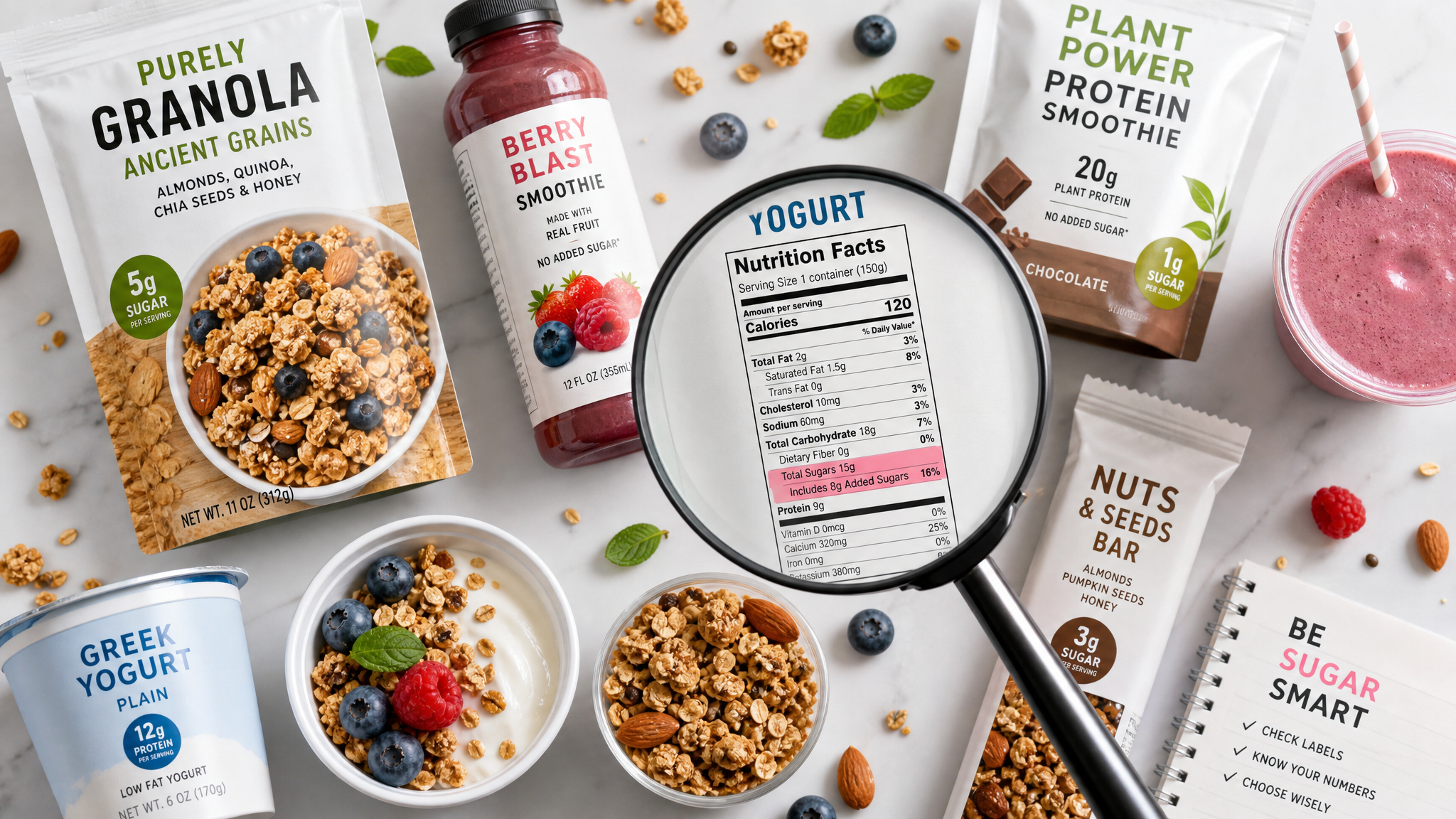
You are trying to eat better. You buy yogurt instead of ice cream. You choose granola over cookies. You drink smoothies instead of soda.
But here is the problem: many “healthy” foods are secretly packed with sugar. Sometimes more than the dessert you were trying to avoid.
Food companies know that “low fat,” “natural,” and “organic” sell. So they add sugar to make those products taste good after the fat is removed. The result is a health halo — a food that feels virtuous but acts like candy in your body.
Here are 7 common “healthy” foods that hide more sugar than you think, how to spot the trap, and what to eat instead.
1. Flavored Yogurt
Plain Greek yogurt is a protein powerhouse. Flavored yogurt is often a sugar bomb.
A single cup of flavored yogurt can contain 15 to 25 grams of added sugar. That is 4 to 6 teaspoons — almost as much as a can of soda.
The fix: Buy plain yogurt and add your own fruit, cinnamon, or a tiny drizzle of honey. You control the sweetness, and you avoid the hidden syrups.
2. Granola and Granola Bars
Granola sounds wholesome. Oats, nuts, seeds, dried fruit. But most commercial granola is held together with sugar — honey, maple syrup, brown rice syrup, or plain cane sugar.
A typical granola bar has 10 to 15 grams of sugar. A bowl of granola can have even more, especially if you pour a generous serving.
The fix: Make your own with minimal sweetener, or choose brands with less than 5 grams of sugar per serving. Measure your portion — granola is calorie-dense even when it is low in sugar.
3. Smoothies and Smoothie Bowls
A smoothie made with fruit, yogurt, and juice sounds healthy. But many store-bought smoothies contain 30 to 50 grams of sugar — more than a milkshake.
Even homemade smoothies can become sugar bombs if you add juice, flavored yogurt, honey, and multiple servings of fruit.
The fix: Use water or unsweetened milk as a base. Add vegetables like spinach or cucumber. Use whole fruit instead of juice. Limit sweeteners. One piece of fruit is usually enough.
4. Dried Fruit
Raisins, cranberries, mango slices — they are fruit, so they must be healthy, right?
Dried fruit concentrates sugar. A small handful of dried cranberries often has added sugar on top of the natural fruit sugar. It is easy to overeat because the water is gone, so the portion looks smaller than it is.
The fix: Eat whole fruit instead. If you want dried fruit, choose unsweetened varieties and stick to a small portion — about 2 tablespoons.
5. Salad Dressings
You build a healthy salad. Then you drown it in dressing that contains 5 to 10 grams of sugar per serving.
Honey mustard, raspberry vinaigrette, and Asian sesame dressings are common culprits. Even “light” dressings often add sugar to compensate for reduced fat.
The fix: Make your own with olive oil, vinegar, lemon juice, mustard, and herbs. Or read labels and choose dressings with less than 2 grams of sugar per serving.
6. Whole Wheat Bread
Whole wheat bread is better than white bread, but many brands still add sugar for flavor and texture.
Some whole wheat breads contain 3 to 5 grams of sugar per slice. Two slices for a sandwich = 6 to 10 grams before you even add fillings.
The fix: Check the ingredient list. Look for bread with no added sugar, or choose brands that list sugar near the end of the ingredients. Sourdough often has less added sugar.
7. Protein Bars
Protein bars are marketed as fitness food. But many are candy bars with protein powder added.
Some popular brands contain 15 to 25 grams of sugar — often more than a chocolate bar. They also use sugar alcohols, which can cause bloating and digestive issues for some people.
The fix: Choose bars with less than 5 grams of sugar and at least 10 grams of protein. Or skip them entirely and eat real food: eggs, nuts, Greek yogurt, or leftover chicken.
How to Read Labels Like a Detective
The nutrition label tells part of the story. The ingredient list tells the rest.
Look for these sugar aliases:
– Cane sugar
– Brown rice syrup
– High fructose corn syrup
– Honey
– Maple syrup
– Agave nectar
– Coconut sugar
– Fruit juice concentrate
– Dextrose, maltose, sucrose
– Anything ending in “-ose”
If sugar appears in the first three ingredients, the product is basically dessert.
Also check serving sizes. A bottle of juice might say “only 12 grams of sugar per serving” — but the bottle contains 2.5 servings.
Why This Matters
Excess sugar is linked to weight gain, energy crashes, increased hunger, fatty liver, inflammation, and dental problems. The World Health Organization recommends limiting added sugar to less than 10% of daily calories — about 25 grams for women and 36 grams for men.
One flavored yogurt and a granola bar can put you over that limit before lunch.
Reducing hidden sugar is one of the fastest ways to improve energy, stabilize mood, and support weight management without counting calories.
Practical Swaps
Instead of flavored yogurt → Plain yogurt + berries + cinnamon
Instead of granola → Plain oats + nuts + seeds
Instead of store smoothies → Homemade with spinach, water, and one piece of fruit
Instead of dried fruit → Whole fresh fruit
Instead of sweet dressing → Olive oil + vinegar + mustard
Instead of sugary bread → Sprouted grain or sourdough
Instead of protein bars → Hard-boiled eggs, nuts, or cheese
Bottom Line
“Healthy” food marketing is designed to make you feel good about your choices. But feeling good and eating well are not always the same thing.
The hidden sugar in yogurt, granola, smoothies, dried fruit, salad dressings, bread, and protein bars can sabotage your health goals without you realizing it.
Read labels. Choose plain over flavored. Make simple swaps. And remember: the healthiest food usually does not come in a package with a health claim on the front.