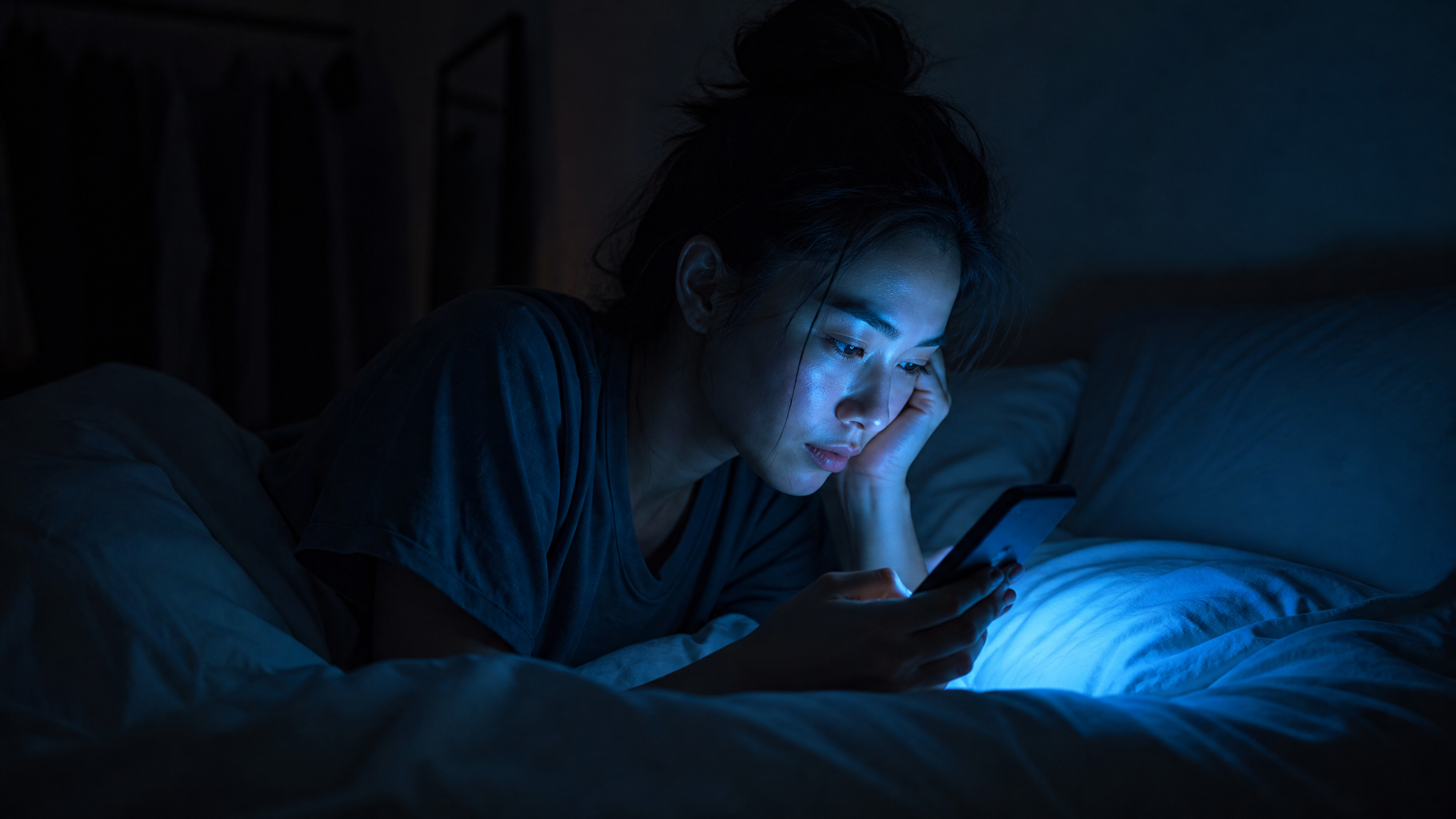
You already know that scrolling your phone at night is probably not great for sleep. But the problem goes deeper than “staying up too late.”
Blue light — the high-energy light emitted by phones, tablets, laptops, and LED bulbs — is actively changing how your brain works. It is not just about eye strain or bedtime procrastination. It is about hormones, brain chemistry, and the internal clock that controls almost every system in your body.
Here is what blue light actually does to your brain, why it matters more than most people think, and how to protect yourself without moving to a cave.
What Is Blue Light?
Blue light is part of the visible light spectrum. It has a short wavelength and high energy. It is everywhere — the sun emits it, and so do digital screens, LED lights, and fluorescent bulbs.
Blue light is not inherently bad. During the day, it boosts alertness, improves mood, and helps regulate your circadian rhythm. The problem is timing. Your brain expects blue light during daylight hours. When it gets blue light at 10 PM, 11 PM, or midnight, the signal is confusing.
How Blue Light Hijacks Your Brain
Your brain has a master clock called the suprachiasmatic nucleus. This clock uses light cues to decide when you should be awake and when you should sleep.
When blue light enters your eyes, it signals the brain: “It is daytime. Stay alert.” This suppresses melatonin — the hormone that makes you feel sleepy. Normally, melatonin rises in the evening and peaks at night. Blue light exposure delays this rise, pushing your body’s sleep signal later.
A 2014 study from Harvard Medical School found that blue light suppresses melatonin for about twice as long as green light and shifts circadian rhythms by up to 3 hours. Another study in the *Proceedings of the National Academy of Sciences* showed that evening blue light exposure reduced melatonin, delayed sleep onset, and reduced morning alertness.
This is not just about feeling tired. Chronic blue light exposure at night is linked to:
– Poor sleep quality
– Difficulty falling asleep
– Reduced REM sleep
– Increased risk of depression
– Weight gain and metabolic disruption
– Increased risk of certain cancers (in shift workers with chronic light exposure)
– Eye strain and potential retinal damage (still being studied)
It Is Not Just About Sleep
The effects of blue light go beyond bedtime.
Mood and mental health: Disrupted circadian rhythms are linked to depression, anxiety, and seasonal affective disorder. Your brain needs predictable light-dark cycles to regulate neurotransmitters like serotonin and dopamine.
Cognitive function: Poor sleep from blue light exposure leads to worse memory, slower reaction times, and reduced problem-solving ability the next day.
Metabolism: Studies on shift workers show that disrupted light exposure is associated with higher rates of obesity, diabetes, and cardiovascular disease. While screen time is not the same as working night shifts, the mechanism — confused circadian signals — is similar.
Eye health: Some research suggests chronic blue light exposure may contribute to digital eye strain and possibly retinal damage over time, though this is still debated among researchers.
The Social Media Trap
Here is what makes blue light exposure worse: it is not just the light. It is what the light is attached to.
Social media, news, emails, and games are designed to be engaging. They trigger dopamine releases, create FOMO, and keep you scrolling. So you are getting a double hit: blue light confusing your brain clock, plus mentally stimulating content keeping your mind active.
Even if you use a blue light filter, the content itself can keep you awake. A dim phone with an interesting argument in the comments section is still a sleep disruptor.
What You Should Know Before Buying Blue Light Glasses
Blue light blocking glasses have become popular. But do they work?
The evidence is mixed. Some studies show they improve sleep when worn in the evening. Others show minimal benefit. The quality of glasses varies widely — some block almost no blue light, while others block significant amounts.
A more reliable approach is to reduce exposure at the source rather than relying on glasses to fix the problem.
Practical Steps to Protect Your Brain
You do not need to throw away your phone. Small changes make a difference.
1. Stop screens 1 to 2 hours before bed
This is the most effective step. If two hours feels impossible, start with 30 minutes. Use that time for reading, stretching, or conversation.
2. Use night mode or blue light filters
Most phones, tablets, and computers have built-in filters that reduce blue light in the evening. Turn them on automatically from sunset to sunrise. They are not perfect, but they help.
3. Dim your lights after sunset
Replace bright overhead LED lights with warmer, dimmer lamps. Use red or amber bulbs in bedrooms and bathrooms. The less blue light in your environment, the better.
4. Get morning sunlight
Exposure to natural light in the morning helps anchor your circadian rhythm. It makes the evening darkness signal stronger. Spend 10 to 15 minutes outside within an hour of waking.
5. Keep devices out of the bedroom
Charge your phone in another room. Use an analog alarm clock. If you use your phone as an alarm, place it across the room so you are not tempted to scroll in bed.
6. Be honest about your usage
Track how much time you spend on screens after 8 PM. Most people underestimate by 50% or more. Awareness is the first step to change.
What About Daytime Blue Light?
Daytime blue light is fine. In fact, it is good for you. It keeps you alert, improves mood, and helps regulate your sleep-wake cycle.
The problem is only at night. So do not avoid screens during the day. Just protect your evenings.
Bottom Line
Blue light from screens is not just an eye strain issue. It is a brain health issue. It suppresses melatonin, disrupts circadian rhythms, affects mood and metabolism, and degrades sleep quality.
The solution is not to abandon technology. It is to be intentional about when and how you use it. Stop screens 1 to 2 hours before bed. Use night mode. Dim your lights. Get morning sunlight. Keep devices out of the bedroom.
Your brain evolved to respond to sunlight and darkness. Modern life has disrupted that pattern. Small adjustments can help restore it — and your sleep will thank you.