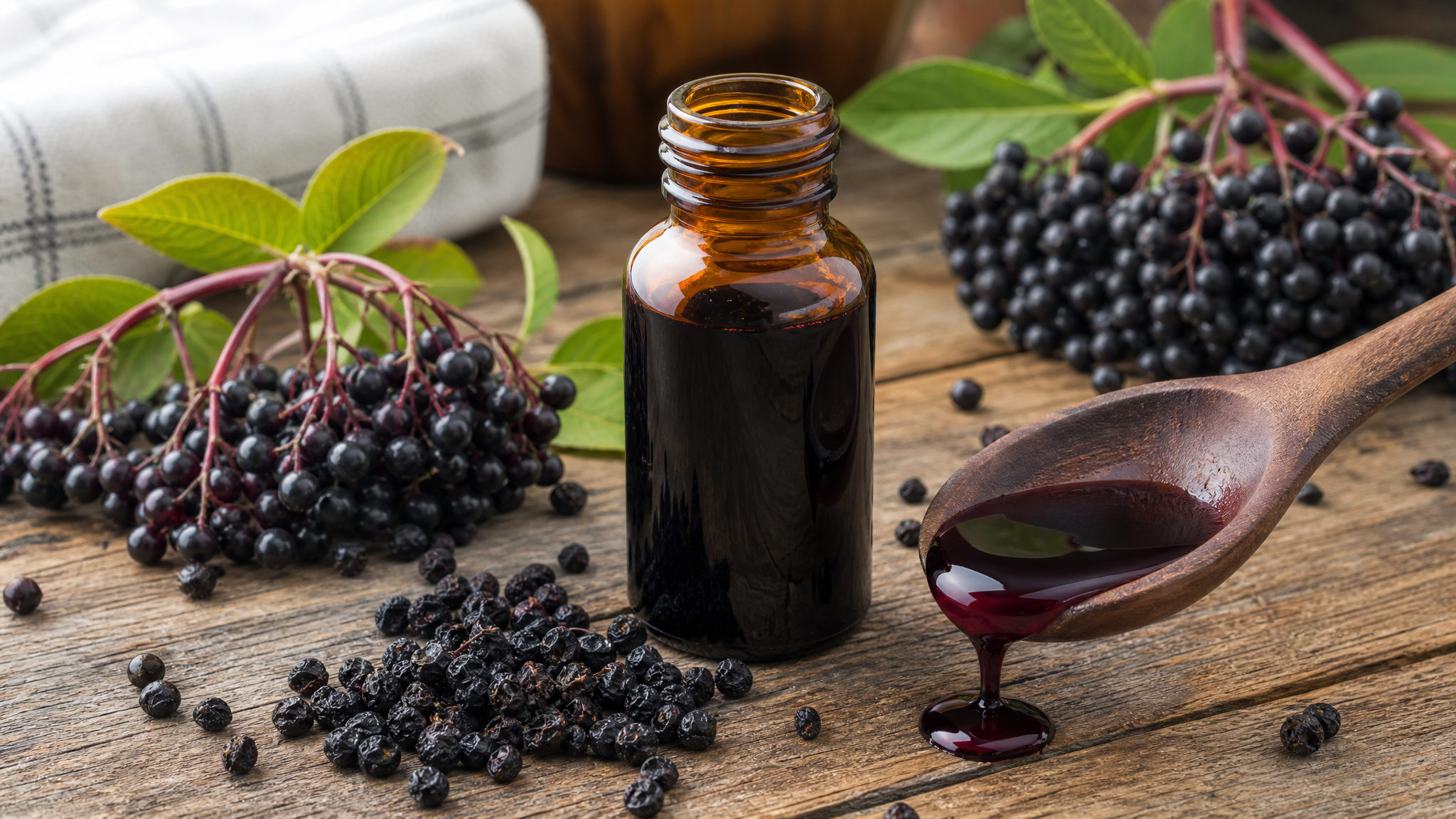
If you’ve walked through the supplement aisle lately, you’ve probably noticed elderberry syrup sitting front and center. Once a niche remedy tucked away in health food stores, elderberry has gone mainstream. Shelves are stocked with syrups, gummies, lozenges, and capsules all promising to “boost immunity” and “fight colds naturally.”
But does elderberry actually work? Or is it just another wellness trend fueled by clever marketing and wishful thinking?
The answer, according to mounting scientific research, sits somewhere in the middle. Elderberry isn’t a miracle cure, but it isn’t placebo-level hype either. Multiple peer-reviewed studies suggest that this dark purple berry can genuinely reduce the severity and duration of cold and flu symptoms — when used correctly and at the right time.
In this article, we’ll unpack what elderberry actually does in your body, what the research really shows, the best ways to use it, and the important safety caveats that rarely make it onto the product label.
What Is Elderberry, Exactly?
Elderberry comes from the Sambucus nigra plant, a flowering shrub native to Europe but now grown across North America and parts of Asia. The plant produces clusters of small, dark purple-black berries that have been used in traditional medicine for centuries.
Hippocrates, often called the father of medicine, reportedly called the elder tree his “medicine chest.” Traditional European healers used elderberry to treat everything from infections and inflammation to burns and joint pain. Native American tribes used various parts of the elder plant for similar purposes.
But traditional use doesn’t equal scientific proof. What makes elderberry interesting to modern researchers is its unique nutritional and chemical profile. The berries are packed with:
- Anthocyanins — potent antioxidants that give elderberry its deep purple color and help fight oxidative stress in the body
- Flavonoids — plant compounds with anti-inflammatory and immune-modulating properties
- Vitamin C — a well-established immune-support nutrient
- Dietary fiber — which supports gut health, an increasingly recognized pillar of immune function
Importantly, raw elderberries are toxic. They contain compounds called cyanogenic glycosides that can produce cyanide in the body. This is why commercial elderberry products use cooked or processed berries, which neutralizes these compounds.
What the Research Actually Shows
Let’s cut through the marketing claims and look at what peer-reviewed studies have found. The research on elderberry is still evolving, but several well-designed trials offer genuinely promising results.
A 2019 meta-analysis published in Complementary Therapies in Medicine reviewed four randomized controlled trials involving 180 participants. The researchers found that elderberry supplementation significantly reduced upper respiratory symptoms. The effect size was substantial enough that the authors concluded elderberry could be a “potentially safer alternative to prescription drugs for routine cases of the common cold and influenza.”
Another influential study, conducted by researchers at the University of Sydney in 2019, found that elderberry compounds directly inhibited influenza virus entry and replication in human cells. The study showed that elderberry phytochemicals stimulated cytokines — chemical messengers that help coordinate the immune response — essentially priming the immune system to respond faster and more effectively.
Perhaps the most widely cited trial is a 2004 study published in the Journal of International Medical Research. Researchers gave 60 patients with influenza-like symptoms either elderberry extract or a placebo. The results were striking: the elderberry group saw symptom relief an average of four days earlier than the placebo group. Participants in the treatment group also needed significantly less rescue medication.
A 2016 study of airline passengers added another layer of practical insight. Researchers followed 312 economy-class travelers taking elderberry extract or placebo from 10 days before travel until 5 days after arriving at their destination. While the elderberry group didn’t experience fewer colds overall, those who did get sick reported significantly less severe symptoms and shorter illness duration.
However, not all studies have been positive. A 2020 randomized controlled trial published in the Journal of General Internal Medicine found that elderberry did not significantly reduce the severity or duration of influenza B in 87 patients. The researchers noted that the study was limited by its small size and the specific strain of influenza circulating at the time.
The takeaway? Elderberry shows genuine promise, particularly for reducing symptom severity and duration, but it isn’t universally effective against every pathogen. More large-scale, rigorously controlled trials are needed to fully understand its limitations.
How Elderberry Works in Your Body
Understanding the mechanism helps explain why elderberry seems effective in some contexts but not a cure-all in others.
First, elderberry’s high concentration of anthocyanins gives it powerful antioxidant properties. These compounds neutralize free radicals — unstable molecules that damage cells and contribute to inflammation. During an infection, the body’s inflammatory response can become excessive, contributing to symptoms like fever, body aches, and mucus production. By moderating oxidative stress, elderberry may help keep inflammation in a more functional range.
Second, elderberry appears to have genuine antiviral properties. The University of Sydney research demonstrated that elderberry phytochemicals can physically block viruses from entering host cells. Think of it like putting a temporary lock on the door that viruses use to get inside your cells. This mechanism is most effective early in an infection, before the virus has widely replicated throughout the body.
Third, elderberry acts as an immunomodulator rather than a simple immune booster. This is an important distinction. “Boosting” the immune system isn’t always desirable — an overactive immune response is what causes autoimmune diseases and severe allergic reactions. Instead, elderberry seems to help regulate immune function, enhancing the body’s ability to recognize and respond to pathogens without pushing the system into overdrive.
Finally, elderberry’s prebiotic fiber content supports gut health, and the gut houses approximately 70% of the body’s immune tissue. A healthier gut microbiome translates to more robust immune surveillance and response.
The Best Way to Take Elderberry
If you’re going to try elderberry, using it correctly matters. Timing, dosage, and product quality all significantly affect outcomes.
Timing is everything. Elderberry works best when taken at the first sign of illness. The antiviral mechanism — blocking viral entry into cells — is most effective before widespread replication has occurred. If you wait until you’re three days into a brutal flu, elderberry’s benefits will be more limited. Many regular users take a maintenance dose during cold and flu season, then increase to a therapeutic dose at the first tickle in the throat.
Dosage varies by product. Most clinical trials have used standardized elderberry extracts, typically providing 300–600 mg of extract per day for general immune support, with therapeutic doses of up to 1,200 mg daily during acute illness. Commercial syrups vary widely in concentration, so follow the manufacturer’s dosing instructions and look for products that specify the amount of elderberry extract per serving.
Syrup vs. capsule vs. gummy. Elderberry syrup is the traditional preparation and has the most clinical research behind it. The liquid form may be absorbed more quickly, which is advantageous when you’re trying to catch an infection early. Capsules offer convenience and typically have a longer shelf life. Gummies are convenient but often contain added sugars and lower concentrations of active compounds. For therapeutic use during illness, syrup or high-quality capsules are generally preferable to gummies.
Look for standardized extracts. The supplement industry is notoriously unregulated. Look for products that specify the amount of anthocyanins or flavonoids per serving, or that use standardized extracts with documented clinical testing. Avoid products with vague “proprietary blends” that don’t disclose actual elderberry content.
Safety Concerns and Who Should Avoid It
Elderberry is generally safe for healthy adults when used as directed, but it isn’t risk-free. Several groups should exercise caution or avoid it entirely.
Raw berries are toxic. Never attempt to make your own elderberry products from raw berries unless you know exactly what you’re doing. The cyanogenic glycosides in uncooked elderberries can cause nausea, vomiting, and severe diarrhea. Commercial products use heat processing or specific extraction methods that neutralize these compounds.
Pregnancy and breastfeeding. There isn’t enough safety data to recommend elderberry during pregnancy or while breastfeeding. Most healthcare providers advise avoiding it during these periods.
Autoimmune conditions. Because elderberry stimulates immune activity, people with autoimmune diseases like rheumatoid arthritis, lupus, or multiple sclerosis should consult their doctor before use. The theoretical concern is that immune stimulation could exacerbate these conditions, though direct evidence is limited.
Medications that suppress the immune system. People taking immunosuppressive drugs — including corticosteroids, biologics, or medications following organ transplantation — should avoid elderberry unless specifically cleared by their physician. The immune-stimulating effects could theoretically counteract these medications.
Blood sugar concerns. Some evidence suggests elderberry may lower blood sugar. This is potentially beneficial for people with diabetes but could cause hypoglycemia if combined with diabetes medications. Monitor blood sugar closely if you fall into this category.
Allergies. People allergic to plants in the Adoxaceae family (which includes elderberry, honeysuckle, and viburnum) may experience allergic reactions.
The Bottom Line
Elderberry isn’t a magical shield against illness, and it won’t replace vaccines, good hygiene, or medical care when you’re seriously ill. But the research does support a more measured, evidence-based view: elderberry can modestly reduce the severity and duration of common colds and some influenza strains, particularly when started early in the course of illness.
For most healthy adults, taking elderberry during cold and flu season is a low-risk strategy with potential upside. Think of it as part of a broader immune-support toolkit — alongside adequate sleep, regular exercise, stress management, and a nutrient-dense diet — rather than a standalone solution.
If you do decide to try elderberry, choose a reputable product with transparent labeling, start it at the first sign of symptoms, and have realistic expectations. It might shave a day or two off your cold. It might make your symptoms more bearable. It won’t turn you into someone who never gets sick.
And that’s okay. In a supplement market flooded with extravagant claims, elderberry’s modest, research-backed benefits are actually something to appreciate.