Why Aloe Vera for Sunburn Is Everywhere — And Why Most People Use It Wrong
Walk down the skincare aisle of any pharmacy and you’ll find it: row after row of bright green bottles promising “99% pure aloe vera gel” for sunburn relief. It’s the go-to remedy your grandmother swore by, the one your friends post about on Instagram after a beach day gone wrong, and the product dermatologists actually do recommend — with some important caveats.
But here’s the uncomfortable truth: most people are using aloe vera for sunburn all wrong. They’re buying the wrong products, applying them incorrectly, and in some cases, making their sunburn worse instead of better. If you’ve ever slathered on a bottle of neon-green gel and wondered why your skin still felt like it was on fire, this guide is for you.
What Aloe Vera Actually Does to Sunburned Skin
Aloe vera isn’t just a trendy natural remedy — there’s real science behind why it works. The gel inside the aloe vera leaf contains over 75 active compounds, including vitamins, minerals, enzymes, and amino acids that work together to soothe damaged skin.
When you get a sunburn, ultraviolet (UV) radiation damages the DNA in your skin cells, triggering inflammation. Your immune system responds by sending blood to the affected area, which is why sunburned skin turns red, hot, and painful. In more severe cases, the damaged skin cells die off and peel — your body’s way of getting rid of the harm.
Aloe vera gel helps this process in several ways. First, it has natural anti-inflammatory properties. A 2022 review published in the journal Burns found that topical application of aloe vera gel led to “significantly faster time to healing” in second-degree burns compared to standard treatments. The compounds in aloe vera — particularly acemannan, a polysaccharide — help reduce the inflammatory response that makes sunburn so uncomfortable.
Second, aloe vera is deeply hydrating. Sunburn draws moisture out of your skin, leaving it dry, tight, and prone to peeling. Pure aloe vera gel is about 99% water, and it contains compounds called mucopolysaccharides that help bind moisture to the skin. This hydration doesn’t just feel good — it supports your skin’s natural healing process.
Third, aloe vera may help prevent infection. The gel contains compounds like anthraquinones that have antimicrobial properties. When skin is sunburned, the damaged outer layer becomes more vulnerable to bacteria. Aloe vera creates a protective barrier while delivering these natural antimicrobial benefits.
The #1 Mistake: You’re Buying Fake Aloe Vera
Here’s where most people go wrong. That bottle of “aloe vera gel” you picked up at the drugstore? There’s a good chance it contains almost no actual aloe vera.
In 2016, Bloomberg News conducted independent laboratory testing on popular store-brand aloe vera gels sold at major retailers including Walmart, Target, and CVS. The results were shocking: samples from three of the four products tested showed no detectable traces of aloe vera at all. Instead, they contained maltodextrin, a cheap filler that mimics the consistency of aloe gel but provides none of the benefits.
Even products that do contain some real aloe vera often list it far down the ingredient list, behind water, alcohol, artificial colors, and synthetic thickeners. That bright green color? It’s usually artificial dye. The cooling sensation? Often from alcohol, which actually dries out your skin further.
Here’s how to spot real aloe vera gel:
Check the ingredient list. Aloe vera (often listed as “aloe barbadensis leaf juice” or “aloe barbadensis leaf gel”) should be the first ingredient — not water, not alcohol. If it’s not in the top three, put it back.
Avoid artificial colors. Real aloe vera gel is clear or slightly cloudy, not neon green. If the product looks like it belongs in a science experiment, it’s loaded with dyes you don’t need on damaged skin.
Skip the alcohol. Many cheap gels contain alcohol (often listed as SD alcohol, denatured alcohol, or isopropyl alcohol) to create that quick-drying, cooling feel. On sunburned skin, alcohol strips away moisture and can increase irritation. Look for alcohol-free formulas.
Look for certification. The International Aloe Science Council (IASC) certifies products that contain genuine aloe vera in meaningful amounts. The IASC seal on the packaging is a reliable indicator of quality.
Mistake #2: You’re Applying It Wrong
Even if you have pure aloe vera gel, how you apply it matters more than you think.
The biggest mistake people make is applying aloe vera to hot, freshly burned skin without cooling it first. When your skin is radiating heat from a sunburn, applying room-temperature gel doesn’t do much to bring down the skin temperature. In fact, it can trap heat against your skin.
The right approach starts with cooling the burn first. Take a cool (not ice-cold) shower or bath for 10-15 minutes, or apply cool, damp compresses to the affected area. This brings down the skin temperature and reduces inflammation before you ever reach for the aloe vera.
Once your skin is cool, apply a thin layer of pure aloe vera gel. You don’t need to cake it on — a light, even layer is more effective than a thick glob that sits on top of your skin. Let it absorb naturally; don’t rub it in aggressively. Sunburned skin is damaged and sensitive, and rubbing can cause further irritation.
Reapply every few hours, or whenever the area starts feeling dry or tight again. Consistency matters more than quantity. Many people apply aloe vera once and expect miracles. Sunburn healing takes time, and your skin needs ongoing hydration and anti-inflammatory support throughout the recovery process.
One more tip: don’t apply aloe vera to broken skin or blisters. If your sunburn is severe enough to blister, the skin barrier is compromised, and even pure aloe vera can potentially introduce bacteria or cause irritation. Cover blistered areas with a sterile, non-stick bandage and seek medical attention if the burn is extensive.
Mistake #3: You’re Using It as a Substitute for Real Sun Protection
This might be the most dangerous mistake of all. Some people treat aloe vera as a safety net — “I’ll get a little sunburned and then fix it with aloe.” This mindset is a fast track to premature aging, dark spots, and increased skin cancer risk.
A sunburn isn’t just a temporary inconvenience. Every sunburn causes DNA damage in your skin cells. Your body repairs most of this damage, but some mutations accumulate over time. According to the Skin Cancer Foundation, having five or more sunburns in your life doubles your risk of melanoma, the deadliest form of skin cancer.
Aloe vera helps heal sunburned skin, but it cannot undo DNA damage. It cannot reverse the cellular harm that increases your long-term risk. The best approach is prevention: broad-spectrum sunscreen with SPF 30 or higher, protective clothing, and seeking shade during peak UV hours (10 AM to 4 PM).
Think of aloe vera as a first-aid treatment, not a license to skip sunscreen. It’s what you reach for when prevention fails — not a substitute for prevention itself.
The Fresh Aloe Vera Debate: Plant vs. Bottle
You’ll find plenty of advice online telling you to break off a piece of an aloe vera plant and rub the fresh gel directly on your sunburn. Is this better than store-bought gel?
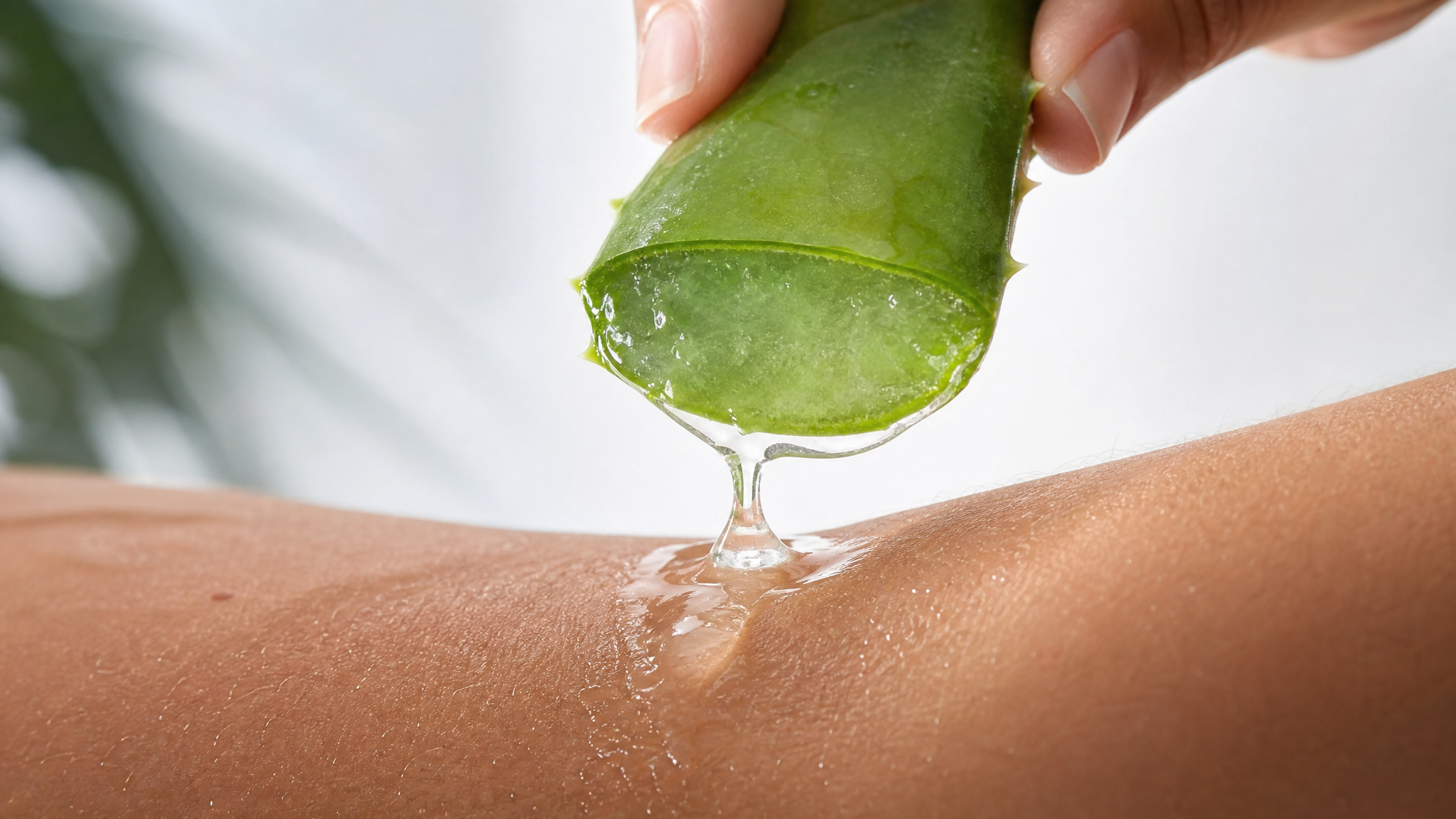
The answer is complicated. Fresh aloe vera gel straight from the leaf is indeed pure and unprocessed. It contains all the natural compounds in their original form, without preservatives or additives. For minor sunburns, it can be an excellent option.
However, fresh aloe vera has drawbacks. The gel oxidizes quickly once exposed to air, losing potency within hours. It also contains natural latex (aloin) from the inner lining of the leaf, which can cause skin irritation or allergic reactions in some people. The yellowish sap just beneath the skin of the leaf is particularly irritating and should never be applied to skin.
If you use fresh aloe vera, harvest it carefully. Cut a mature leaf from the base of the plant, wash it thoroughly, and slice it open lengthwise. Use a spoon to scoop out only the clear gel from the center, avoiding the yellow latex layer. Apply the gel immediately for maximum potency.
For most people, a high-quality, certified pure bottled aloe vera gel is more practical and consistent. Look for products that are cold-pressed and minimally processed to preserve the active compounds.
What the Science Actually Says
Let’s be clear about what research supports and what it doesn’t. Aloe vera has been studied for wound healing for decades, but not all studies are created equal.
A landmark 2009 systematic review in the journal Burns analyzed multiple studies on aloe vera for burn healing. The researchers concluded that aloe vera gel appeared to speed healing of first and second-degree burns compared to conventional treatments. However, they noted that many of the studies were small or had methodological limitations, and called for larger, more rigorous trials.
More recent research has been promising. A 2022 review confirmed that aloe vera gel application led to faster healing times for second-degree burns. A 2024 study found that topical aloe vera was a safe and effective adjunct therapy for diabetic foot ulcers, suggesting its wound-healing properties extend beyond simple burns.
What science does NOT support: aloe vera as a treatment for severe burns, sunburn prevention, or reversal of sun damage. It is a supportive treatment for mild to moderate sunburns, not a miracle cure.
The National Center for Complementary and Integrative Health (NCCIH) notes that topical aloe vera is generally safe for minor skin conditions, but warns that evidence for many of its claimed benefits is limited or inconsistent. The organization recommends consulting a healthcare provider before using aloe vera as a treatment for any condition.
When Aloe Vera Isn’t Enough
Most sunburns can be managed at home with proper care, including aloe vera, hydration, and cool compresses. But some sunburns require medical attention.
Seek medical help if you experience any of the following: blistering over a large portion of your body, fever, chills, nausea, confusion, dizziness, signs of infection (increasing pain, swelling, pus, or red streaks), or sunburn that doesn’t improve after a few days. These can be signs of severe sunburn or sun poisoning, which may require professional treatment.
Children and older adults are more vulnerable to sunburn complications and should be monitored closely. People taking certain medications — including some antibiotics, acne treatments, and anti-inflammatory drugs — may be more sensitive to sun exposure and should take extra precautions.
How to Build a Real Sunburn Recovery Routine
If you’re dealing with a sunburn right now, here’s a step-by-step recovery plan that actually works:
Step 1: Cool down immediately. Take a cool bath or shower, or apply cool, damp compresses for 10-15 minutes. Do not use ice directly on sunburned skin — this can cause further damage.
Step 2: Hydrate from the inside. Sunburn draws fluid to the skin’s surface and away from the rest of your body. Drink extra water to prevent dehydration and support healing.
Step 3: Apply pure aloe vera gel. Use a certified pure, alcohol-free product, or carefully harvested fresh gel. Apply a thin layer to cool, clean skin. Reapply every 2-3 hours.
Step 4: Moisturize as healing progresses. Once the initial heat and redness subside (usually after 24-48 hours), switch to a gentle, fragrance-free moisturizer to prevent peeling and support skin barrier repair.
Step 5: Protect healing skin. New skin after a sunburn is extra sensitive to UV damage. Keep it covered and use sunscreen religiously until fully healed.
Step 6: Consider an anti-inflammatory. Over-the-counter ibuprofen can help reduce pain and inflammation in the first 24-48 hours. Always follow dosing instructions.
The Bottom Line
Aloe vera for sunburn isn’t a myth — but it’s not a magic bullet either. The benefits are real, supported by scientific research, and dermatologists do recommend it. But those benefits only apply when you’re using real, pure aloe vera correctly.
Most people fail on both counts. They buy products loaded with fillers, dyes, and alcohol instead of actual aloe vera. They apply it to hot, un-cooled skin and expect instant relief. They use it once and forget about it, rather than maintaining consistent care throughout the healing process.
If you take one thing from this article, let it be this: read the ingredient label. Real aloe vera should be the star of the show, not an afterthought buried beneath a chemistry set of additives. Your sunburned skin deserves the real thing — and now you know how to find it.
Have you been using aloe vera wrong? Check your bathroom cabinet tonight and see what’s actually in that bottle. Your summer skin will thank you.