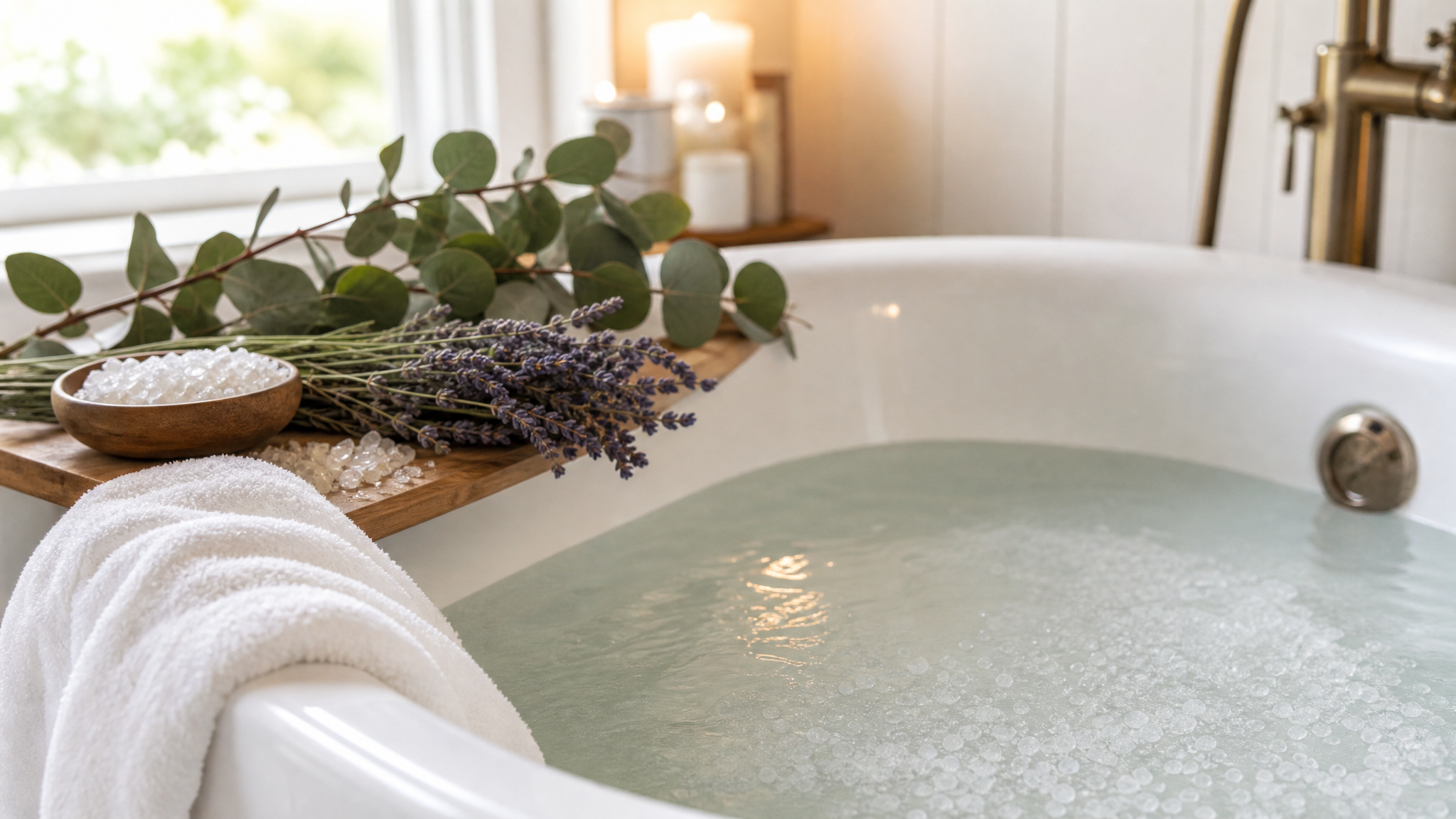
There is a good chance you have seen the large bags of Epsom salt at the pharmacy, the grocery store, or even at your grandmother’s house. For decades, people have sworn by adding a few cups of this inexpensive mineral compound to a warm bath to soothe sore muscles, reduce stress, and even “detox” the body. But what does the science actually say? Is Epsom salt a legitimate wellness tool, or is it just another old wives’ tale that has survived thanks to clever marketing?
The truth, as it often does, lies somewhere in the middle. While many of the most popular claims about Epsom salt baths are not supported by strong clinical evidence, the ritual itself and the compound’s specific uses do offer real benefits for certain conditions. In this article, we will break down exactly what Epsom salt is, what it can and cannot do for your body, and how to use it safely and effectively.
What Is Epsom Salt, Really?
Despite its name, Epsom salt is not the kind of salt you sprinkle on your food. Chemically, it is magnesium sulfate, a compound made up of magnesium, sulfur, and oxygen. It gets its name from the town of Epsom in Surrey, England, where it was originally discovered in natural mineral springs during the 17th century. It looks similar to table salt, with the same crystalline structure, but it tastes distinctly bitter and is not meant for seasoning your meals.
Today, Epsom salt is widely available in drugstores and supermarkets, typically found in the pharmacy or personal care aisle. It is incredibly affordable, often costing just a few dollars for a large bag. Its popularity stems from the fact that magnesium is the fourth most abundant mineral in the human body and is involved in over 300 biochemical reactions, including those that regulate muscle and nerve function, blood sugar levels, and blood pressure. Many people do not get enough magnesium from their diet, which has led to the belief that soaking in Epsom salt can help replenish these levels through the skin.
The Big Myth: Can Your Skin Actually Absorb Magnesium?
The central theory behind Epsom salt baths is that when the compound dissolves in warm water, it releases magnesium and sulfate ions that can be absorbed through your skin to raise your body’s magnesium levels. If this were true, it would be a revolutionary way to treat magnesium deficiency without oral supplements. Unfortunately, the scientific evidence simply does not support this claim.
Several studies have investigated whether magnesium can penetrate the skin barrier during a bath, and the results have been consistently negative. A 2017 review published in the journal BMC Complementary Medicine and Therapies found no evidence that magnesium is absorbed through the skin in clinically meaningful amounts. Your skin is designed to be a barrier, and while some substances can pass through, magnesium ions appear to be too large to be absorbed effectively during a short soak.
This does not mean Epsom salt baths are useless. It simply means that the primary mechanism of benefit is not what most people think it is. The real benefits come from other factors, which we will explore next.
What Epsom Salt Baths Actually Do for Your Body
Even if your skin is not soaking up magnesium like a sponge, taking an Epsom salt bath can still provide genuine relief for several common complaints. The key is understanding where the benefits actually come from.
Muscle Soreness and Pain Relief
This is the most common reason people reach for Epsom salt, and it is also where the science gets interesting. While the magnesium is likely not being absorbed through your skin, the warm water itself is doing the heavy lifting. Soaking in a hot bath causes your blood vessels to dilate, which improves circulation to your muscles and helps flush out metabolic waste products like lactic acid. The buoyancy of the water also reduces the strain on your joints and muscles, allowing them to relax more fully.
So why does adding Epsom salt seem to make a difference for so many people? It is likely a combination of the placebo effect and the extended time spent in the bath. When you add Epsom salt, you are more likely to soak for the recommended 15 to 20 minutes rather than taking a quick shower. That extended exposure to warm water is what provides the real therapeutic benefit.
Stress Reduction and Better Sleep
Adequate magnesium levels are essential for managing stress and promoting sleep because the mineral helps your brain produce neurotransmitters like GABA that induce relaxation. While a bath will not raise your magnesium levels, the ritual of taking a warm soak before bed is a well-established sleep hygiene practice. Your body temperature naturally drops after you get out of a hot bath, and this cooling effect signals to your brain that it is time to sleep. The quiet, screen-free time in the tub also helps lower cortisol levels, making it easier to unwind.
Skin Health and Hydration
Bathing in general is good for your skin because it hydrates the outer layer and can help soften and remove dead skin cells. For people with conditions like eczema or psoriasis, a warm bath can soothe itching and reduce inflammation. Epsom salt may offer additional benefits here because the sulfate component can help soften rough skin and scales. Some dermatologists recommend Epsom salt baths as part of a broader skin care routine for these conditions, though it is not a cure.
Reducing Swelling and Inflammation
There is some evidence that Epsom salt soaks can help reduce swelling, particularly in the feet and ankles. A small study found that pregnant women who soaked their feet in Epsom salt water experienced less swelling compared to those who used plain water. This may be due to osmotic pressure, the same principle that draws water out of swollen tissues. For people with arthritis, gout, or minor sprains, an Epsom salt soak can provide temporary relief by reducing fluid buildup in the affected area.
The Oral Use Most People Do Not Know About
While baths get all the attention, Epsom salt is also an FDA-approved laxative. When taken orally, magnesium sulfate draws water into your intestines, which softens stool and promotes bowel movements. This can be effective for occasional constipation, but it comes with significant caveats.
Oral Epsom salt is not a gentle remedy. It can cause cramping, bloating, and diarrhea. It should never be used for more than one week at a time, and it is not suitable for people with kidney disease, severe stomach pain, nausea, or vomiting. Pregnant and breastfeeding women should consult a doctor before using it. If you are looking for a magnesium supplement to address a deficiency, there are far better options available, such as magnesium glycinate or magnesium citrate, which are absorbed more effectively and are easier on your digestive system.
How to Take an Epsom Salt Bath the Right Way
If you want to try an Epsom salt bath for muscle soreness, stress relief, or skin health, here is the proper way to do it:
- Use the right amount: Add about two cups of Epsom salt to a standard-sized bathtub filled with warm water. For a foot soak, use half a cup in a basin of warm water.
- Dissolve it completely: Pour the salt under running water to help it dissolve faster. Undissolved crystals can feel gritty against your skin.
- Soak for 15 to 20 minutes: This is the sweet spot. Less time may not provide full relaxation benefits, while longer soaks can dry out your skin.
- Stay hydrated: Warm baths make you sweat, so drink a glass of water before and after your soak.
- Moisturize afterward: Pat your skin dry and apply a moisturizer to lock in hydration.
For an enhanced experience, you can add a few drops of essential oils like lavender or eucalyptus, though be aware that oils can make the tub slippery. Avoid using Epsom salt in hot tubs or whirlpool baths, as the salt can damage the equipment.
Who Should Avoid Epsom Salt Baths
Epsom salt baths are generally safe for most people, but there are some exceptions. You should avoid them or consult a doctor first if you have:
- Severe skin inflammation or open wounds
- A history of allergic reactions to magnesium sulfate
- Kidney disease or impaired kidney function
- Diabetes-related nerve damage that affects your ability to sense water temperature
- Very low blood pressure, as hot baths can cause dizziness
If you experience any itching, rash, or discomfort during or after an Epsom salt bath, rinse off immediately with plain water and discontinue use.
The Bottom Line: Worth the Hype or Not?
Epsom salt baths are not the miracle cure that some wellness blogs claim them to be. The idea that you can absorb significant amounts of magnesium through your skin is not supported by science, and claims about “detoxifying” the body are largely unfounded. However, that does not mean Epsom salt is worthless.
The real benefits of an Epsom salt bath come from the warm water, the relaxation ritual, and the extended time spent away from screens and stress. For muscle soreness, stress relief, and skin hydration, a 20-minute soak can be genuinely therapeutic. The salt itself may provide minor benefits for skin softening and swelling reduction, even if the magnesium absorption theory is a myth.
At a few dollars per bag, Epsom salt is an inexpensive and low-risk addition to your self-care routine. Just do not expect it to replace a balanced diet, proper hydration, or medical treatment for serious conditions. Use it as a complement to a healthy lifestyle, not a substitute for one. And if you are dealing with chronic pain, persistent skin issues, or suspected magnesium deficiency, talk to a healthcare professional about more effective treatments.
Sometimes the best remedies are the simplest ones. A warm bath, a quiet room, and 20 minutes of uninterrupted peace might be exactly what your body needs, with or without the salt.