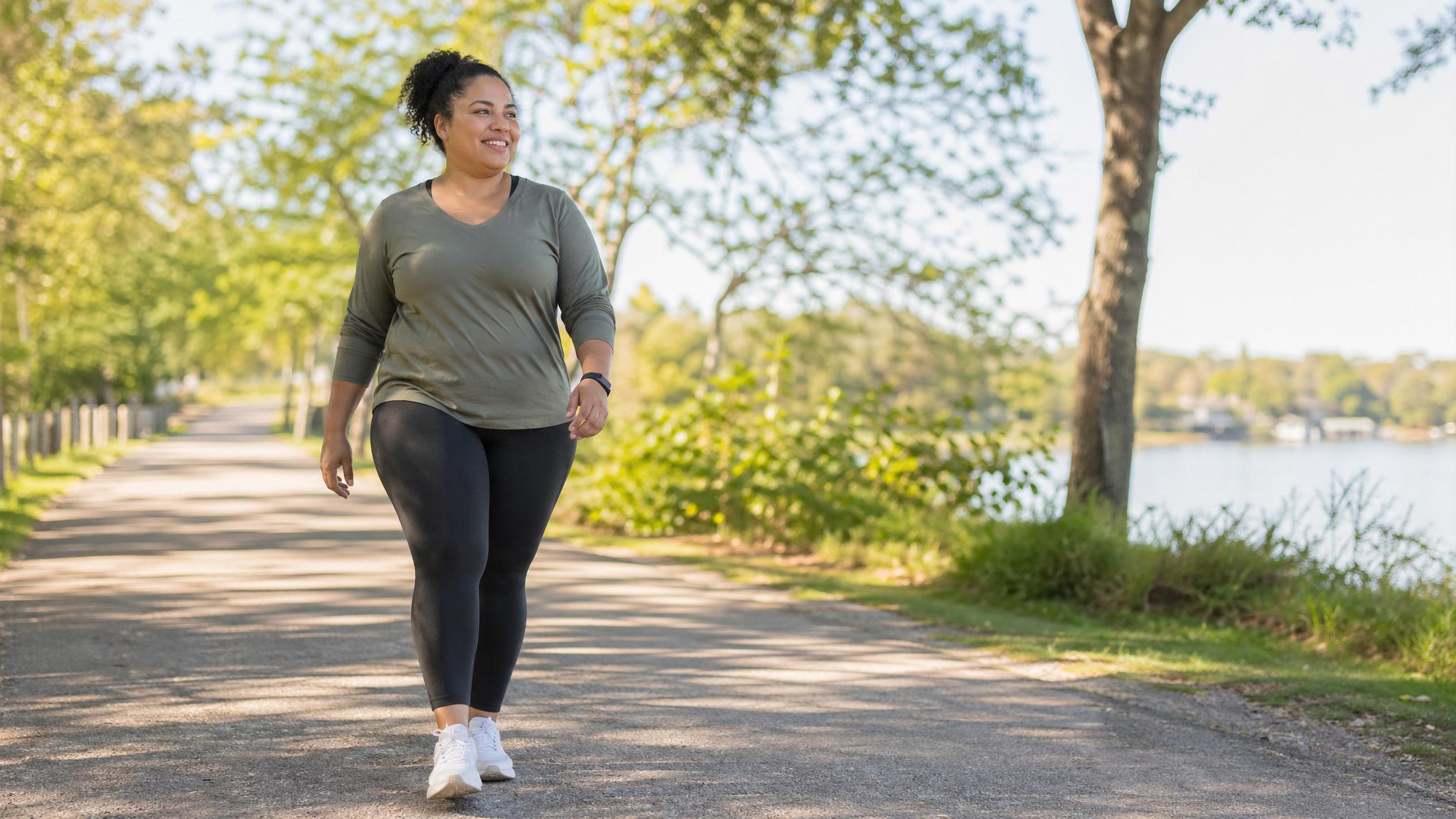
If you hate exercise, you are not lazy. You may just be choosing the wrong kind of movement.
A lot of fitness advice is written for people who already like workouts: gym routines, strict schedules, intense classes, running plans, and “no excuses” motivation. That can be useful for some people, but it is terrible for anyone who already feels tired, busy, self-conscious, or bored by traditional exercise.
The truth is simpler: the best exercise for people who hate exercise is the one you can repeat without dreading it. For most beginners, that usually means walking — especially brisk walking mixed with small amounts of strength training.
Walking is easy to start, free, low-pressure, and surprisingly powerful when you do it consistently. You do not need to look athletic. You do not need a gym membership. You do not need to punish yourself. You just need to move a little more than you did yesterday.
Here is why walking works so well, how to make it effective, and how to build a realistic plan if you are starting from almost zero.
Why Walking Is the Best Starting Point
The Centers for Disease Control and Prevention says adults need at least 150 minutes of moderate-intensity physical activity each week, plus 2 days of muscle-strengthening activity. That might sound like a lot, but it can be broken into smaller pieces. Thirty minutes a day, five days a week, is one simple version.
The key phrase is “moderate intensity.” You do not have to sprint. You do not have to collapse in sweat. Moderate intensity means your heart rate rises, your breathing gets faster, and you feel warmer, but you can still talk. The NHS explains it this way: at moderate intensity, you should still be able to talk, but you would not be able to sing a song.
That makes brisk walking a perfect entry-level exercise. It is accessible, scalable, and easy to adjust. If you are very inactive, a 7-minute walk may be enough at first. If you already walk sometimes, you can increase pace, distance, hills, or frequency.
The Real Goal: Move More, Sit Less
One reason people fail with exercise is that they aim too high too soon. They go from doing almost nothing to trying a 45-minute workout six days a week. That feels impressive for three days, then life happens, soreness hits, and the plan dies.
A better goal is this: move more, sit less.
The World Health Organization defines physical activity broadly as any bodily movement produced by skeletal muscles that uses energy. That includes walking, cycling, household chores, active transport, recreational movement, and structured exercise. In other words, your body does not only benefit from movement if it happens in a gym.
The CDC also says some physical activity is better than none. Adults who sit less and do any amount of moderate or vigorous activity gain some health benefits.
That is important if you hate workouts. You do not need to become a “fitness person” overnight. You need to become a person who moves more often.
Why Walking Feels Easier to Stick With
Walking has a few advantages that make it unusually sustainable.
First, there is almost no learning curve. Most people already know how to walk. You do not need to memorize exercises, count reps, or worry about looking awkward.
Second, walking can be attached to routines you already have. You can walk after lunch, after dinner, during phone calls, before grocery shopping, or while listening to music or a podcast.
Third, walking does not trigger the same intimidation as “working out.” If your brain resists exercise, calling it a walk can lower the emotional barrier.
Fourth, walking can improve mood and energy without feeling like punishment. Harvard Health notes that regular exercise can improve mood and lower risk for several conditions. The WHO also highlights physical activity benefits for mental health, sleep, brain health, and overall well-being.
The best plan is not the hardest one. It is the one you can repeat on normal days, not just motivated days.
What Counts as a Good Walk?
A good fitness walk is not a casual shuffle, but it is not a race either. Aim for a pace where:
- Your breathing is slightly faster
- Your body feels warmer
- You can talk, but singing would be difficult
- Your arms naturally swing
- You feel like you are doing something, but you are not suffering
If you are just starting, even an easy walk counts. Build the habit first, then increase intensity.
A helpful progression looks like this:
Week 1: 10 minutes, 4 days a week
Week 2: 15 minutes, 4 days a week
Week 3: 20 minutes, 4–5 days a week
Week 4: 25–30 minutes, 5 days a week
If that is too much, cut it in half. If it is too easy, add hills, stairs, or a faster pace.
The 10-Minute Rule for People Who Hate Exercise
If you dread exercise, use the 10-minute rule. Tell yourself you only have to walk for 10 minutes. After 10 minutes, you are allowed to stop.
This works because starting is usually the hardest part. Once you are outside or already moving, continuing often feels easier. But even if you stop at 10 minutes, you still kept the habit alive.
A 10-minute walk after meals can be especially practical. It does not require changing clothes, driving to a gym, or finding a large block of time. It also feels connected to daily life instead of separate from it.
Three 10-minute walks in a day can add up to 30 minutes. That is not “cheating.” It is exactly the kind of small-chunk approach public health guidelines allow.
Add Strength Training Without Making It Complicated
Walking is excellent, but adults also need muscle-strengthening activity at least 2 days per week. This does not mean you need heavy weights or a gym.
Strength training helps support muscle, joints, posture, metabolism, and long-term independence. It is especially important if your goal is weight management, body shape, or healthy aging.
For people who hate exercise, start with a tiny routine:
- 8 chair squats
- 8 wall push-ups
- 10 glute bridges
- 10 standing calf raises
- 20-second plank or wall plank
Do that twice. It may take 5–8 minutes.
That is enough to begin. Later, you can add resistance bands, dumbbells, or longer routines. The point is to stop thinking strength training has to be dramatic.
The Best Exercise Plan for Exercise Haters
Here is a realistic weekly plan:
Monday: 15–25 minute brisk walk
Tuesday: 5–8 minute strength routine
Wednesday: 15–25 minute brisk walk
Thursday: Rest or easy walk
Friday: 15–25 minute brisk walk
Saturday: 5–8 minute strength routine
Sunday: Gentle walk, stretching, or active chores
This plan is not extreme. That is the point. It gives your body regular movement without making your life revolve around fitness.
If you are more advanced, increase walking time to 30–45 minutes or add hills. If you are brand new, start with 5–10 minutes.
How to Make Walking Less Boring
If walking feels boring, do not rely on willpower. Change the experience.
Try:
- Listening to a podcast only while walking
- Calling a friend during walks
- Choosing a route with trees, shops, or sunlight
- Walking at sunset or early morning
- Using a step counter for motivation
- Taking “photo walks” where you look for interesting scenes
- Walking indoors at a mall when weather is bad
- Doing one song at a faster pace, then one song easy
Harvard Health notes that activity monitors can help some people increase movement. Even a simple step counter can make walking feel more like a game. But do not let the number become stressful. The best step goal is one you can actually repeat.
What If You Are Too Tired?
If you are exhausted, intense exercise may feel impossible. That does not mean you should do nothing. It means you should lower the starting line.
Try a “minimum walk” of 5 minutes. Walk to the end of the street and back. Walk around the block. Walk inside your home during one song. Stretch while the kettle boils.
On low-energy days, the win is not burning calories. The win is proving that movement still belongs in your life.
But if fatigue is severe, new, persistent, or comes with symptoms like chest pain, shortness of breath, fainting, unexplained weight loss, or weakness, get medical advice. Exercise is helpful, but it should not be used to ignore warning signs.
What If You Want Weight Loss?
Walking can support weight loss, but it works best when paired with realistic eating habits. A common mistake is expecting exercise alone to overcome frequent high-calorie snacking, sugary drinks, or oversized portions.
That said, walking is still valuable even when the scale moves slowly. It can improve fitness, mood, blood sugar regulation, sleep quality, and consistency. For many people, walking also reduces the “all or nothing” mindset that makes health routines collapse.
If weight loss is your goal, focus on:
- Daily movement
- Protein at meals
- More fiber-rich foods
- Fewer sugary drinks
- Better sleep
- Strength training twice weekly
- Patience
Do not use walking as punishment for eating. Use it as a daily vote for your health.
When Walking Is Not Enough
Walking is a great start, but over time your body adapts. That is a good thing. It means you are getting fitter.
When walks feel too easy, you can progress by:
- Walking faster
- Adding hills or stairs
- Increasing distance
- Carrying light groceries or a small backpack
- Adding short intervals: 30 seconds fast, 90 seconds easy
- Adding strength training
- Trying cycling, swimming, dancing, or beginner classes
The best next exercise is one you are curious enough to repeat.
The Bottom Line
If you hate exercise, stop trying to force yourself into routines made for people who love it. Start with walking.
Walking is simple, free, low-pressure, and backed by public health guidelines. Add a short strength routine twice a week, and you have a strong foundation for better fitness without making your life miserable.
The goal is not to become perfect. The goal is to become consistent.
Start with 10 minutes today. If you can do more, do more. If not, you still started — and that counts.
Simple Walking and Home Workout Tools
You do not need equipment to start walking, but a few simple tools can make consistency easier. For Philippines readers, these Shopee PH search links can help compare practical options:
Choose what fits your budget and routine. The habit matters more than the gear.
Sources
- Centers for Disease Control and Prevention: Adult Activity Guidelines
- World Health Organization: Physical Activity Fact Sheet
- NHS: Benefits of Exercise
- Harvard Health Publishing: Starting to Exercise