<!DOCTYPE html>
<html lang=”en”>
<head>
<meta charset=”UTF-8″>
<meta name=”viewport” content=”width=device-width, initial-scale=1.0″>
<title>The Danger of Taking Painkillers Before Bed – Health FrontRun</title>
<style>
body { font-family: -apple-system, BlinkMacSystemFont, ‘Segoe UI’, Roboto, Oxygen, Ubuntu, Cantarell, sans-serif; line-height: 1.6; color: #333; max-width: 800px; margin: 0 auto; padding: 20px; }
h1 { font-size: 2.5rem; color: #2c3e50; border-bottom: 3px solid #3498db; padding-bottom: 10px; }
h2 { font-size: 1.8rem; color: #2980b9; margin-top: 2em; }
p { margin-bottom: 1.2em; }
ul, ol { margin-left: 1.5em; margin-bottom: 1.5em; }
li { margin-bottom: 0.5em; }
blockquote { border-left: 4px solid #3498db; padding-left: 1em; font-style: italic; color: #555; }
.key-takeaway { background-color: #f8f9fa; border-left: 4px solid #2ecc71; padding: 1em; margin: 1.5em 0; }
.warning { background-color: #fff3cd; border-left: 4px solid #ffc107; padding: 1em; margin: 1.5em 0; }
</style>
</head>
<body>
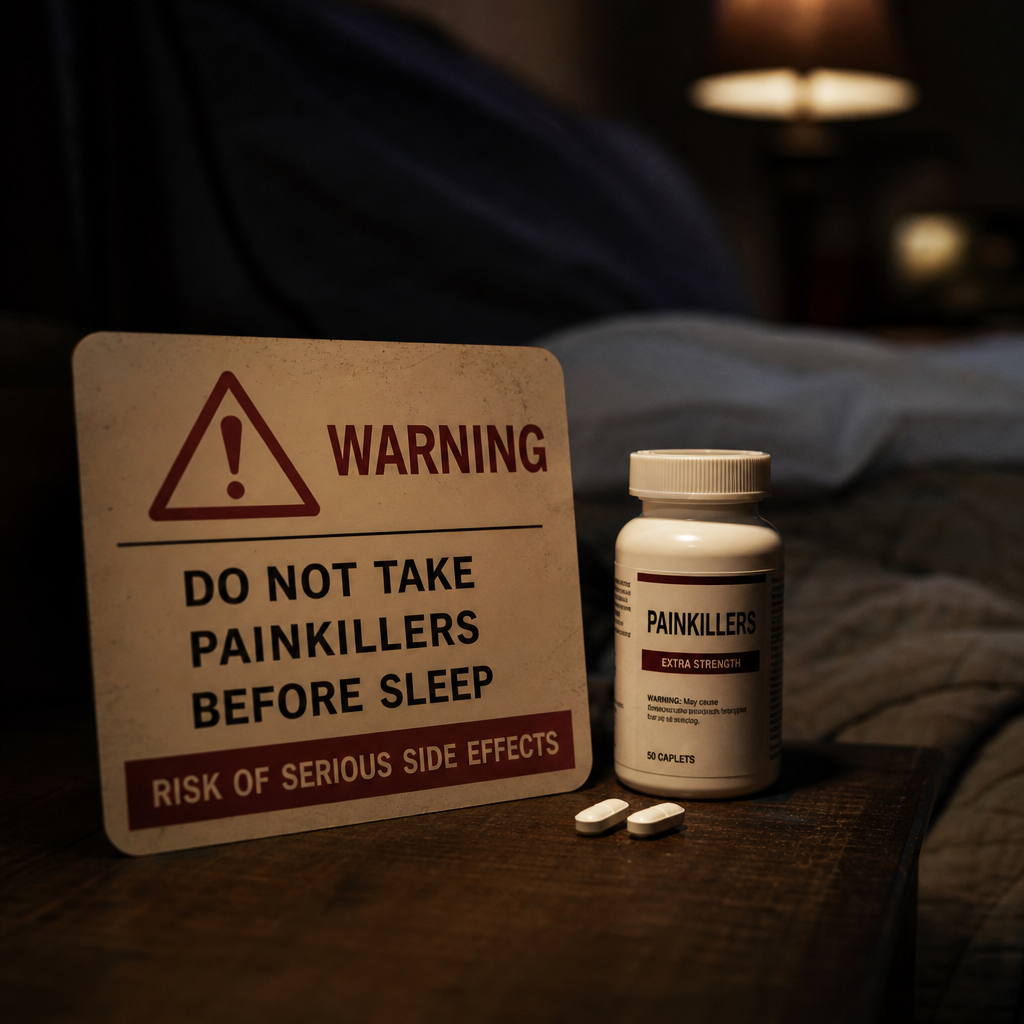
<h1>The Danger of Taking Painkillers Before Bed – What You Need to Know</h1>
<p><em>Published on May 16, 2026</em></p>
<p>You’ve had a long day. Your back aches, your head throbs, or maybe that old knee injury is flaring up again. All you want is a good night’s sleep, so you reach for the ibuprofen or acetaminophen bottle and take a dose before turning off the light. It seems harmless—after all, these are over‑the‑counter medications millions of people use every day.</p>
<p>But what if that bedtime painkiller habit is silently putting your health at risk?</p>
<p>Emerging research suggests that taking painkillers right before sleep can carry hidden dangers—from digestive damage and kidney stress to masking serious health problems and even worsening your sleep quality. In this article, we’ll explore why popping a pill right before bed might be one of the riskiest things you do for your health, and what safer alternatives you can turn to instead.</p>
<h2>1. The Two Main Types of Over‑the‑Counter Painkillers</h2>
<p>Before we dive into the risks, let’s quickly review the two most common categories of OTC pain relievers:</p>
<ul>
<li><strong>NSAIDs (non‑steroidal anti‑inflammatory drugs)</strong> – Examples include ibuprofen (Advil, Motrin), naproxen (Aleve), and aspirin. These drugs reduce inflammation, pain, and fever by blocking enzymes called COX‑1 and COX‑2.</li>
<li><strong>Acetaminophen (paracetamol)</strong> – Sold as Tylenol and many generic brands. It relieves pain and fever but does not reduce inflammation. Its exact mechanism is still debated, but it’s thought to act on the central nervous system.</li>
</ul>
<p>Both classes are generally safe when used occasionally and according to label instructions. However, the timing of your dose—especially right before bedtime—can dramatically alter their safety profile.</p>
<h2>2. The Sleep‑Pain Vicious Cycle</h2>
<p>Pain and sleep have a bidirectional relationship. Chronic pain makes it harder to fall asleep and stay asleep, while poor sleep lowers your pain threshold and amplifies discomfort.</p>
<p>According to the Sleep Foundation, “People who suffer from chronic pain know firsthand how difficult it can be to get a good night’s sleep. Sleep and pain appear to have a bidirectional relationship.”</p>
<p>It’s tempting to break this cycle with a painkiller, but doing so right before bed introduces new risks that can ultimately make the problem worse.</p>
<h2>3. Danger #1 – Gastrointestinal Damage (Especially from NSAIDs)</h2>
<p>NSAIDs are notorious for irritating the stomach lining. When you take them right before lying down, the medication sits in your stomach for hours without the benefit of gravity to help move it through your digestive system. This increases the time the drug is in direct contact with your stomach wall, raising the risk of:</p>
<ul>
<li>Gastritis (inflammation of the stomach lining)</li>
<li>Peptic ulcers</li>
<li>Gastrointestinal bleeding</li>
</ul>
<p>The risk is higher if you take NSAIDs on an empty stomach—something many people do at bedtime because they haven’t eaten for several hours.</p>
<div class=”warning”>
<p><strong>Warning:</strong> Taking NSAIDs before bed can lead to silent bleeding that you might not notice until it becomes severe. If you must take an NSAID at night, always do so with a small snack or a glass of milk to buffer the irritation.</p>
</div>
<h2>4. Danger #2 – Kidney Stress and Potential Damage</h2>
<p>NSAIDs reduce blood flow to the kidneys by inhibiting prostaglandins—hormone‑like substances that help keep renal arteries open. When you’re asleep, your blood pressure naturally dips (a phenomenon called “nocturnal dipping”). Combine that with NSAID‑induced reduced kidney perfusion, and you create a scenario where your kidneys are getting less blood and oxygen than they need.</p>
<p>Over time, this can contribute to:</p>
<ul>
<li>Acute kidney injury (especially in older adults or those with pre‑existing kidney issues)</li>
<li>Chronic kidney disease</li>
<li>Fluid retention and high blood pressure</li>
</ul>
<p>Acetaminophen is generally safer for the kidneys, but it carries its own liver‑related risks (see below).</p>
<h2>5. Danger #3 – Masking Serious Underlying Conditions</h2>
<p>Pain is your body’s alarm system. When you suppress it with medication right before sleep, you may be covering up symptoms that could indicate a serious problem—like a heart attack, appendicitis, or a ruptured disc.</p>
<p>If you wake up with severe pain that you’ve been medicating away each night, you could be delaying diagnosis and treatment until the condition has progressed to a dangerous point.</p>
<blockquote>
“Pain that wakes you up at night is a red flag that should always be evaluated by a doctor—not just silenced with a pill.”
</blockquote>
<h2>6. Danger #4 – Increased Cardiovascular Risk</h2>
<p>The FDA has issued warnings that NSAIDs can increase the risk of heart attack and stroke, even in people without pre‑existing heart disease. The risk appears to be dose‑dependent and may be higher with longer‑term use.</p>
<p>While a single bedtime dose is unlikely to trigger a cardiovascular event, habitual use—especially in people with hypertension, diabetes, or a history of heart disease—can incrementally raise the risk.</p>
<h2>7. Danger #5 – Liver Damage (Acetaminophen Overdose Risk)</h2>
<p>Acetaminophen is metabolized by the liver. At recommended doses, it’s safe for most people. However, taking it right before bed—especially after consuming alcohol—can push your liver’s detoxification capacity to the limit.</p>
<p>Why? Alcohol also taxes the liver, and the combination can lead to toxic metabolites building up while you sleep. This can cause:</p>
<ul>
<li>Elevated liver enzymes</li>
<li>Acetaminophen‑induced hepatotoxicity</li>
<li>In severe cases, acute liver failure</li>
</ul>
<p>The line between a safe dose and a toxic one is thinner than many realize, and taking acetaminophen at night increases the chance of accidental overdose if you’ve already taken it earlier in the day.</p>
<h2>8. Danger #6 – Rebound Headaches and Medication‑Overuse Headaches</h2>
<p>If you regularly take painkillers at bedtime for headaches, you might be setting yourself up for a vicious cycle. Overuse of analgesics (more than 10–15 days per month) can lead to “rebound headaches” or medication‑overuse headaches.</p>
<p>Your brain becomes dependent on the drug to regulate pain signals, and when the medication wears off, the headache returns—often worse than before. This creates a pattern where you need another dose to function, trapping you in a daily pain‑pill cycle.</p>
<h2>9. Danger #7 – Disrupted Sleep Architecture</h2>
<p>Some painkillers contain caffeine or other stimulants (for example, certain migraine formulations). Even plain NSAIDs and acetaminophen can interfere with sleep architecture by altering prostaglandin levels, which play a role in regulating sleep‑wake cycles.</p>
<p>The result? You might fall asleep faster because the pain is gone, but your sleep may be less restorative, with reduced deep‑wave and REM sleep. Over time, this can leave you feeling fatigued despite getting a full night’s rest.</p>
<h2>10. Danger #8 – Dependency and Addiction (Especially with Opioid‑Containing Medications)</h2>
<p>While most OTC painkillers are not addictive, some prescription nighttime pain medications contain opioids (codeine, hydrocodone, oxycodone). Taking these right before bed can accelerate tolerance and dependence because your body is exposed to the drug during a prolonged, uninterrupted period.</p>
<p>Opioids also suppress breathing—a risk that’s magnified during sleep, especially if you have sleep apnea or other respiratory conditions.</p>
<div class=”key-takeaway”>
<p><strong>Key takeaway:</strong> If your doctor has prescribed an opioid‑containing painkiller for nighttime use, make sure they’ve assessed your risk for sleep‑disordered breathing and discussed a clear plan to avoid dependence.</p>
</div>
<h2>11. Safer Alternatives to Bedtime Painkillers</h2>
<p>Before reaching for the pill bottle, consider these non‑pharmacological approaches to manage nighttime pain:</p>
<ul>
<li><strong>Heat or cold therapy:</strong> A heating pad or ice pack can reduce inflammation and muscle tension without systemic side effects.</li>
<li><strong>Gentle stretching or yoga:</strong> Light movement before bed can ease muscle stiffness and improve circulation.</li>
<li><strong>Meditation and deep‑breathing exercises:</strong> These techniques lower stress hormones that amplify pain perception.</li>
<li><strong>Optimize your sleep environment:</strong> A supportive mattress, comfortable pillow, and cool room temperature can reduce pain triggers.</li>
<li><strong>Topical analgesics:</strong> Creams or patches containing menthol, capsaicin, or lidocaine provide localized relief without taxing your liver or kidneys.</li>
</ul>
<h2>12. When Is It Actually Safe to Take a Painkiller Before Bed?</h2>
<p>There are situations where taking a painkiller at night is appropriate—provided you follow these guidelines:</p>
<ol>
<li><strong>Take it with a small snack</strong> to protect your stomach (especially for NSAIDs).</li>
<li><strong>Use the lowest effective dose</strong> for the shortest possible duration.</li>
<li><strong>Avoid mixing painkillers with alcohol</strong> or other sedatives.</li>
<li><strong>Consult your doctor</strong> if you need nighttime pain relief for more than a few days in a row.</li>
</ol>
<p>If you have kidney disease, liver problems, a history of ulcers, or cardiovascular risk factors, talk to your healthcare provider before using any pain medication regularly at bedtime.</p>
<h2>13. The Bottom Line</h2>
<p>Painkillers are valuable tools when used correctly, but popping them right before sleep introduces unique risks that many people overlook. From gastrointestinal damage and kidney stress to masking serious conditions and disrupting sleep quality, the bedtime painkiller habit is far from benign.</p>
<p>Instead of relying on pills, explore non‑drug approaches first. If you must take medication, do so with food, at the lowest effective dose, and never as a long‑term solution without medical supervision.</p>
<p>Your body’s pain signals are there for a reason—listen to them, and seek professional help to address the root cause, not just the symptom.</p>
<hr>
<p><strong>Disclaimer:</strong> This article is for informational purposes only and does not constitute medical advice. Always consult with a qualified healthcare provider before making changes to your medication regimen.</p>
</body>
</html>